Featured Courses
Tri-Faith Initiative offers opportunities to explore interfaith topics in greater depth through a selection of engaging courses.
Each Tri-Faith course incorporates academic research, diverse perspectives, facilitates fruitful dialogue, and supports meaningful learning that advances interfaith relationships and understanding.
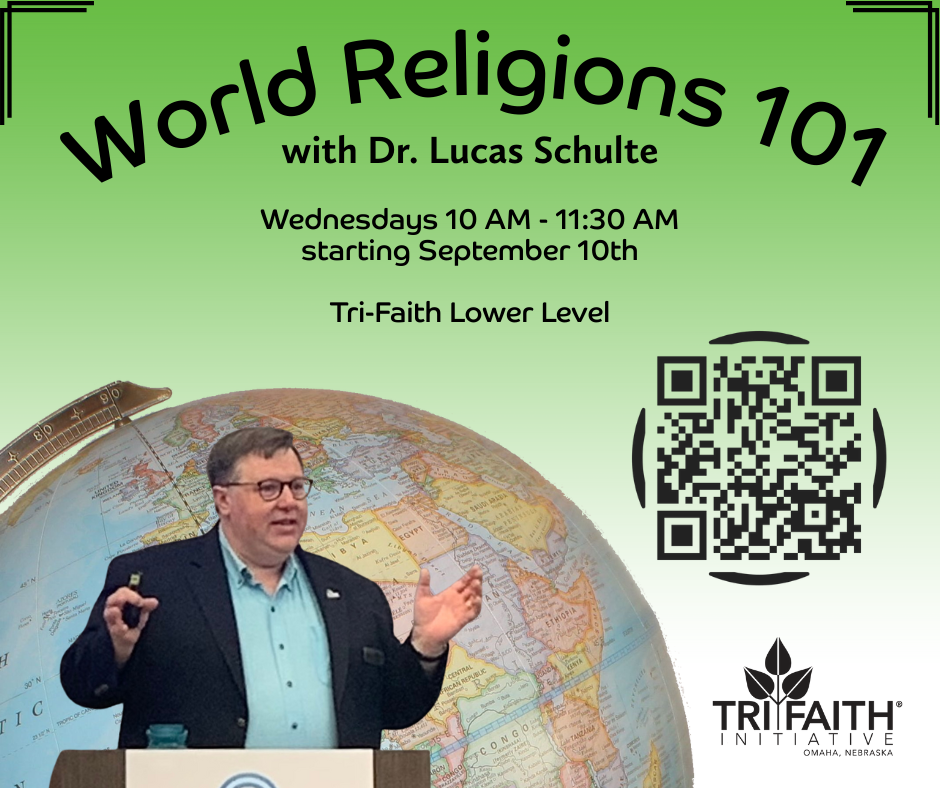
A Tri-Faith Introduction to World Religions
Have you ever been curious about other religions?
As part of Tri-Faith’s mission to “cultivate inclusive environments to advance interfaith relationships and understanding,” this course seeks to advance interfaith understanding by teaching about some of the faiths and religions of the world. The course begins with an introductory session about the religious studies approaches used for the course, as well as discussing different definitions for “religion.”
The course will then spend two sessions each on the following religions: Hinduism, Buddhism, Zoroastrianism, Judaism, Christianity, and Islam (future versions of this course will interchange some of these for other religions such as Jainism, Shintoism, Taoism, Confucianism, Sikhism, etc.). Topics will include information about the population size and geographical concentrations of these various religions, an introduction to some of the core tenets of each religion, an overview of some of the major sacred writings and scriptures within the religion, a brief introduction to key and/or foundational figures within each religion, a timeline and historical overview of major events and people within the history of each religion, and an overview of some of the major branches within the religion.
- Sept 10 – Introduction: Overview of the global and US religious landscapes, a discussion of the definitions of “religion” and their limitations, and an introduction to a religious studies approach (in contrast to theological or faith-based approaches).
- Sept 17 – Hinduism 1: An intro to Hinduism, the Indus Valley Civilization and connections to other cultures, Vedic culture
- Sept 24 – NO CLASS due to Rosh Hashannah
- Oct. 1 – Hinduism 2: the Upanishads, social classes, the Bhagavad Gita, classical theism and branches.
- Oct. 8 – Buddhism 1: An intro to Buddhism, Three Jewels, Siddartha Gautama (the Buddha), Essentials of the Buddha’s Teaching
- Oct 15 – Buddhism 2: The spread of Buddhism, Theravada, Mahayana and new ideas, Bodhisattvas, Pure Land Buddhism, Zen Buddhism, Vajrayana Buddhism, views from Tibet.
- Oct 22 – Zoroastrianism 1: An intro to Zoroastrianism, origins, Zarathustra, Zoroastrian Teachings, Zoroastrian practices
- Oct 29 – Zoroastrianism 2: The ancient Persian Empire, ancient Zoroastrianism and other religions, Persian Paradise, Later influences.
- Nov. 5 – Judaism 1: An intro to Judaism, the Tanak, Religion in ancient Judah and Israel, Second Temple Judaism
- Nov 12 – Judaism 2: Early Rabbinic Period, Judaism under Christian and Islamic Rule, Emancipation and Change, the Shoah and aftermath, Modern Judaism, Teachings of Judaism, Major Branches of Contemporary Judaism.
- Nov 19 – Christianity 1: An intro to Christianity; differences between Protestant, Catholic, and Eastern Orthodox bibles; the life and teachings of Jesus of Nazareth; early spread of Christianity; Constantine and Christianity.
- Nov 26 – NO CLASS due to Thanksgiving
- Dec 3 – Christianity 2: Early Divisions in Christianity; The Great Schism between Eastern and Western Christianity; Medieval Christianity; the Protestant Reformation and Catholic Counter-Reformation; Christianity’s family tree of denominations.
- Dec 10 – Islam 1: An intro to Islam; Arabia before Islam; the Qur’an; the Prophet Muhammad; The Spread of Islam
- Dec. 17 – Islam 2: the Five Pillars of Islam; Branches of Islam (Sunni and Shi’a); Sufism; Mosques; Islam in the World.
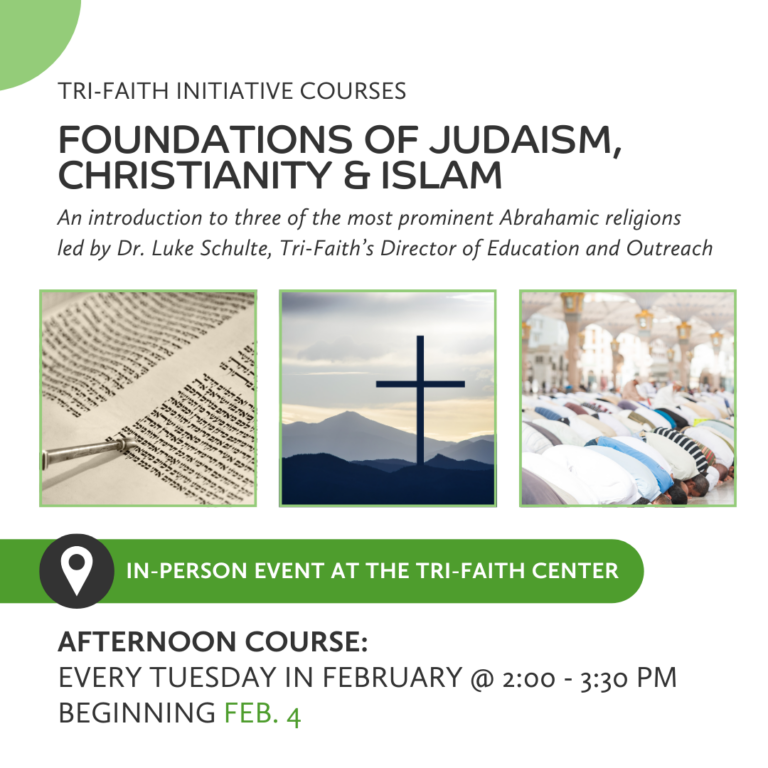
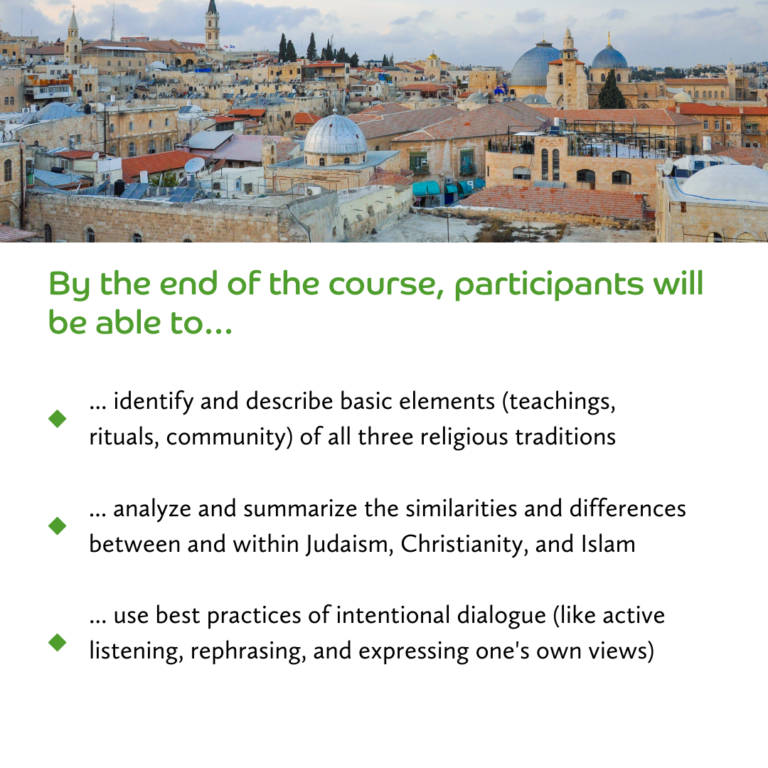
The Foundations of Judaism, Christianity, and Islam
Afternoon In-Person Offering: Tuesdays from 2:00 to 3:30 PM, beginning February 4th through February 25th , hosted in the Tri-Faith Center.
Cost: This five-session course is provided to the community at no cost, though donations that help Tri-Faith staff continue to develop high-quality programs are strongly encouraged.
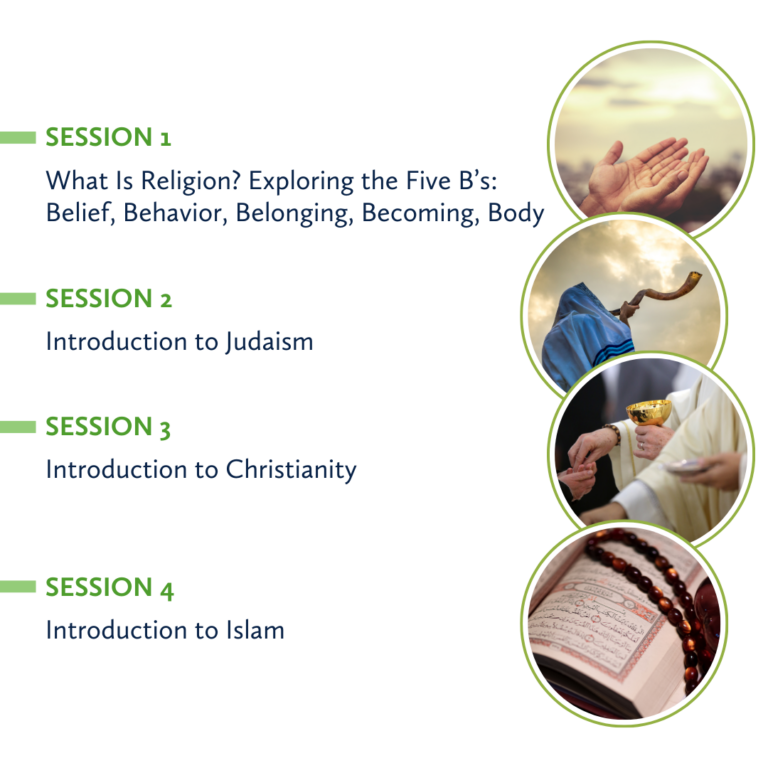
Course Overview: This course is an introduction to the three of the most prominent religious traditions in human history: Judaism, Christianity, and Islam. It will consist of a brief historical overview of each these three traditions as well as a discussion of the Five Bs of religion as they relate to each tradition: Belief, Behavior, Belonging, Becoming, and Body.
By the end of the course, participants will be able to identify and describe basic elements of all three religion traditions, analyze and summarize the similarities and differences between and within Judaism, Christianity and Islam, and use best practices of intentional dialogue like active listening, rephrasing, and expressing one’s own views.
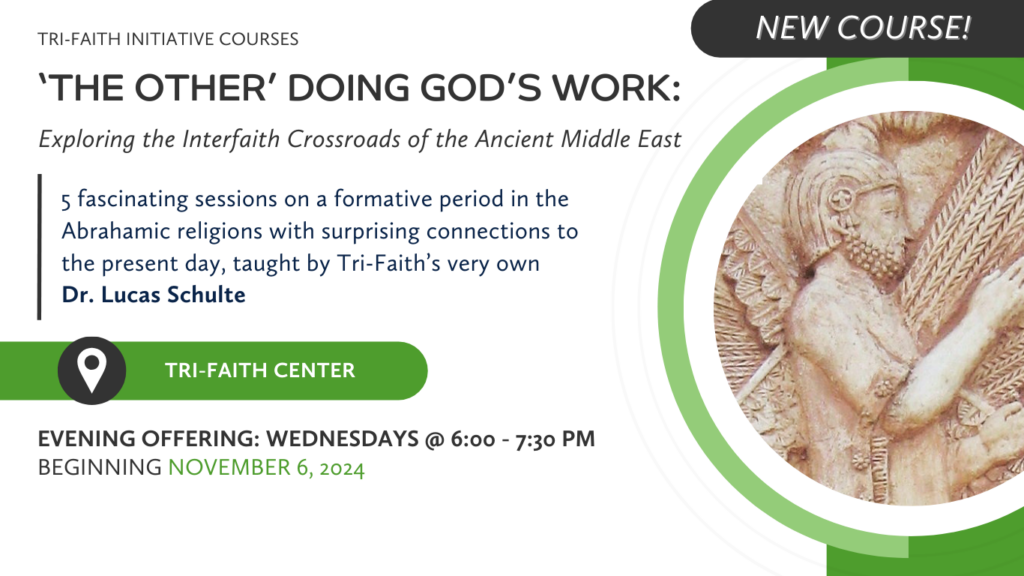
‘The Other’ Doing God’s Work: Exploring the Interfaith Crossroads of the Ancient Middle East
Afternoon In-Person Offering: Tuesdays from 2:00 to 3:30 PM, beginning Aug. 27 through Sept. 24, hosted in the Tri-Faith Center.
Evening In-Person Offering: Wednesdays from 6:00 to 7:30 PM beginning Nov. 6 through Dec. 11 (Skipping the week of Nov. 27 due to Thanksgiving), hosted in the Tri-Faith Center.
Cost: This five-session course is provided to the community at no cost, though donations that help Tri-Faith staff continue to develop high-quality programs are strongly encouraged.
Course Overview: Seeing the beautiful and dutiful ways in which our neighbors practice their faith and live out their values can inspire us to be more engaged in our own faith; indeed, this is the kind of inspiration that can be (and so often is) drawn from the Tri-Faith Commons.
But how were the Abrahamic religions as we know them today shaped by this kind of inspiration, this “holy envy,” as Krister Stendahl called it? To find out, we must journey back to a time when prophets and scribes believed a Zoroastrian Persian emperor served as a prime example of expressing Jewish values.
Leveraging fascinating content about the Persian period that Dr. Lucas Schulte has curated, as well as some new knowledge that he has contributed to the field throughout his career, this five-session course aims to move audiences beyond limiting misconceptions (ex: “The Middle East has always been embroiled in bloody religious conflict”) and offer them a fresh perspective on a critical, transformative period for Judaism — and later, a pivotal point of reflection for Christianity and Islam.
When we discover that the interfaith relations of the past were far more interesting and experimental than we thought, we tend to approach the perceived limitations of the present with renewed hope!
Though we recommend attending all five sessions consecutively, each session is a stand-alone learning experience.
Click the registration links below for more details on each specific session:
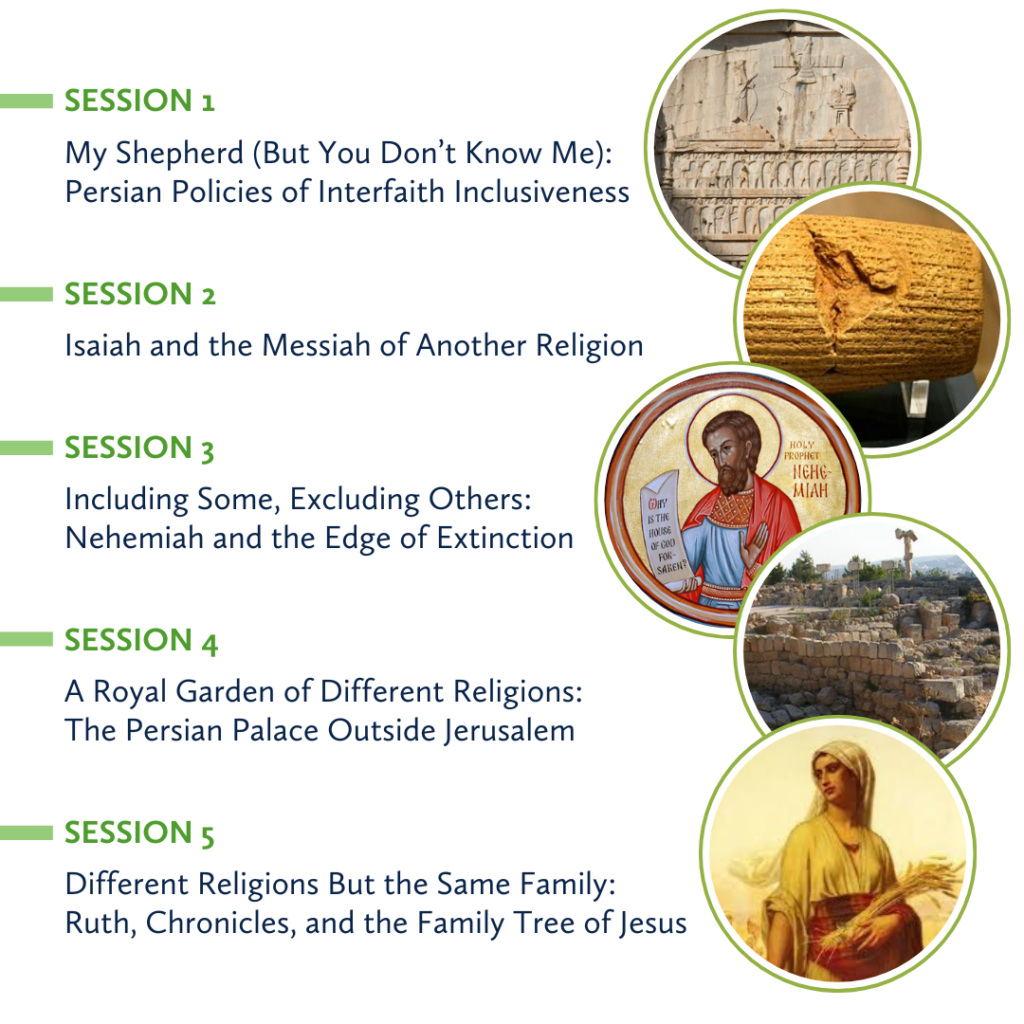
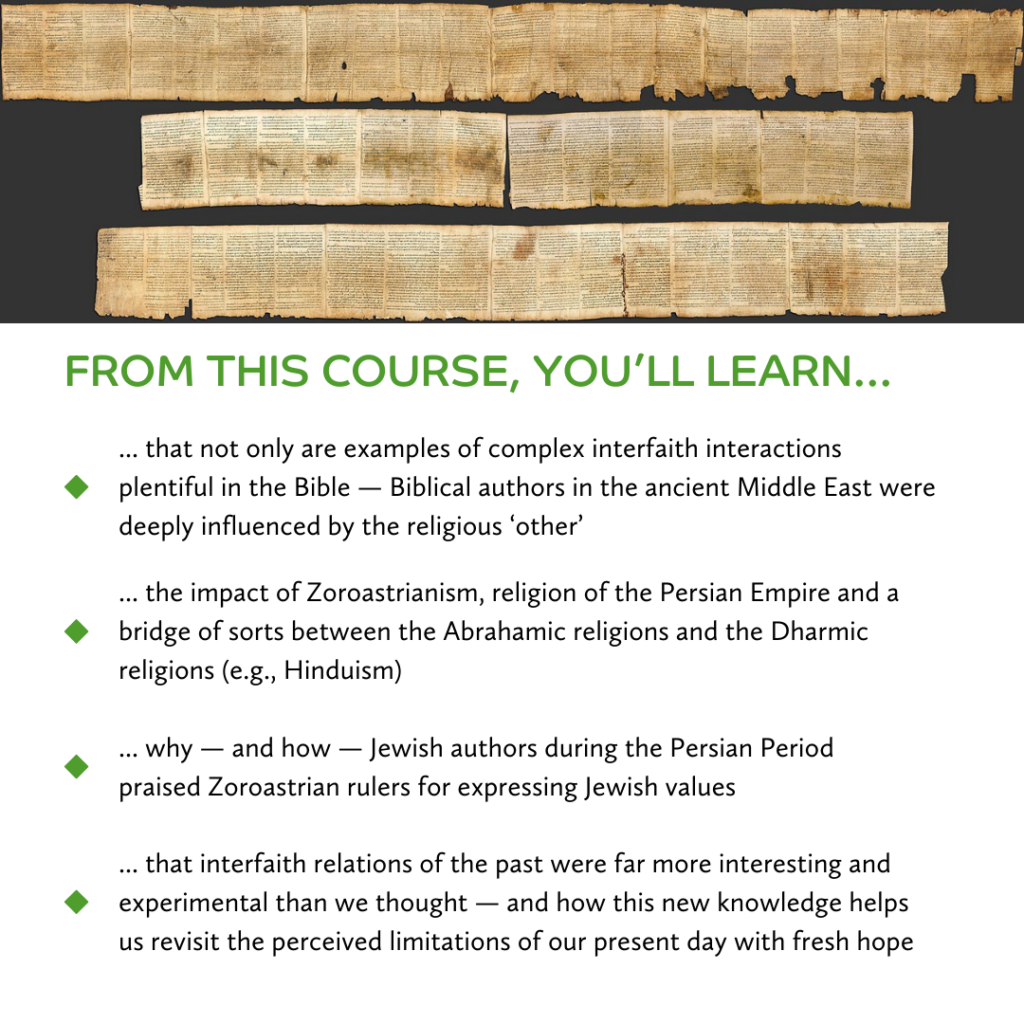
‘The Other’ Doing God’s Work: Exploring the Interfaith Crossroads of the Ancient Middle East
Afternoon In-Person Offering: Tuesdays from 2:00 to 3:30 PM, beginning Aug. 27 through Sept. 24, hosted in the Tri-Faith Center.
Evening In-Person Offering: Wednesdays from 6:00 to 7:30 PM beginning Nov. 6 through Dec. 11 (Skipping the week of Nov. 27 due to Thanksgiving), hosted in the Tri-Faith Center.
Cost: This five-session course is provided to the community at no cost, though donations that help Tri-Faith staff continue to develop high-quality programs are strongly encouraged.
Course Overview: Seeing the beautiful and dutiful ways in which our neighbors practice their faith and live out their values can inspire us to be more engaged in our own faith; indeed, this is the kind of inspiration that can be (and so often is) drawn from the Tri-Faith Commons.
But how were the Abrahamic religions as we know them today shaped by this kind of inspiration, this “holy envy,” as Krister Stendahl called it? To find out, we must journey back to a time when prophets and scribes believed a Zoroastrian Persian emperor served as a prime example of expressing Jewish values.
Leveraging fascinating content about the Persian period that Dr. Lucas Schulte has curated, as well as some new knowledge that he has contributed to the field throughout his career, this five-session course aims to move audiences beyond limiting misconceptions (ex: “The Middle East has always been embroiled in bloody religious conflict”) and offer them a fresh perspective on a critical, transformative period for Judaism — and later, a pivotal point of reflection for Christianity and Islam.
When we discover that the interfaith relations of the past were far more interesting and experimental than we thought, we tend to approach the perceived limitations of the present with renewed hope!
Though we recommend attending all five sessions consecutively, each session is a stand-alone learning experience.
Click the registration links below for more details on each specific session:
Spread the Word
